

2026 Mantis Ootheca (PRE-ORDER)
2026 Mantis Ootheca (PRE-ORDER)
Couldn't load pickup availability
PURCHASE OF LIVE ANIMALS IS SUBJECT TO OUR Animal Code of Ethics.
As part of our spring educational animal series, we are bringing up Mantis egg cases! These little guys are incredibly smart and aware.
Ootheca will be ready for pickup at Black Barn Mercantile on Thursday, March 12, 2026 between 12-5:30PM. If you can't make it in that day, no problem just come and see us Friday, March 13 @ 12-5:30PM.
Included:
- One ootheca, or egg case, of Tenodera sinensis, the Chinese mantis containing 50-300 eggs
Project Duration:
- 6-8 months
Required Supplies:
- Food for the hatchlings. Pre-order flightless fruit fly kit here.
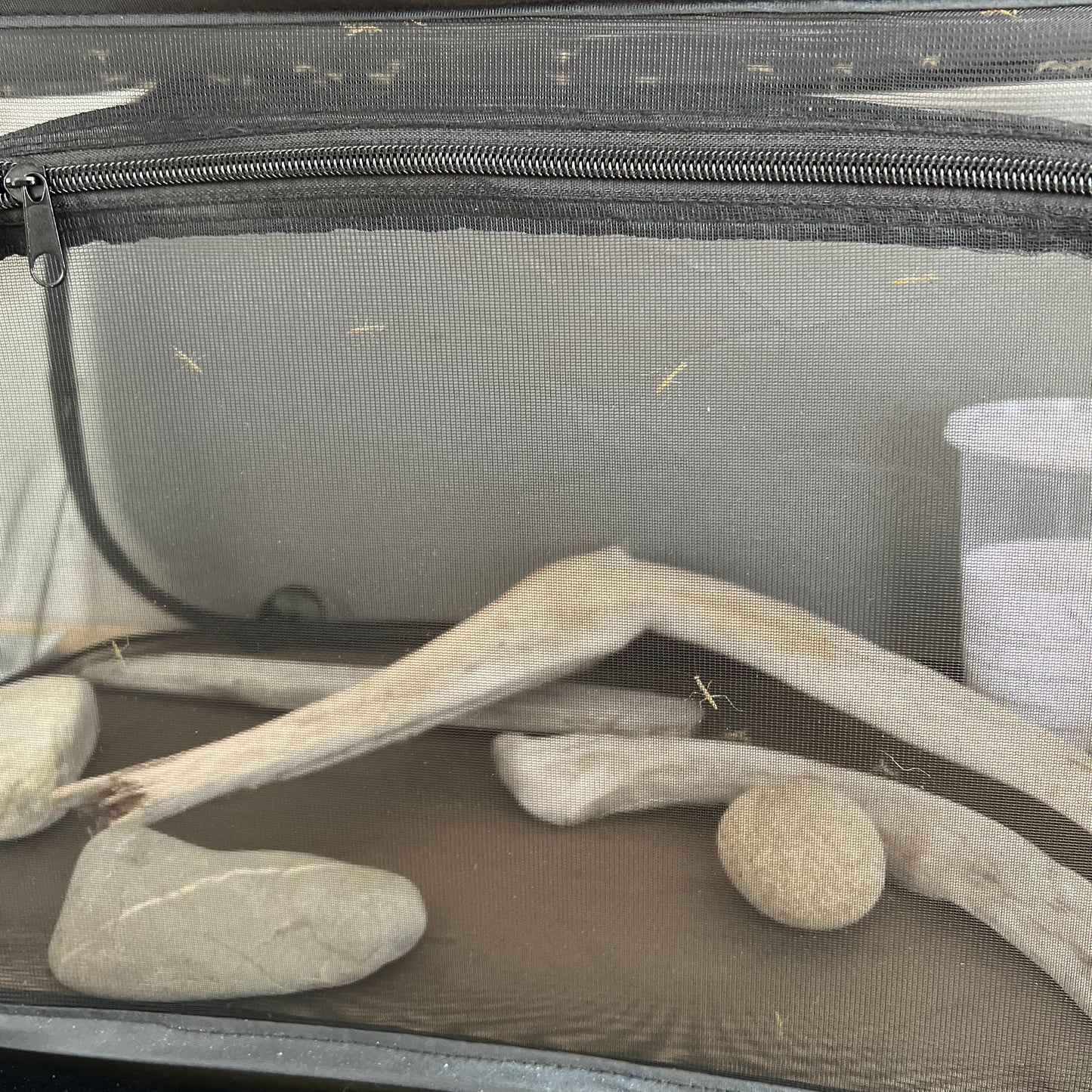
- Something to hatch the ootheca in (aquariums and critter keepers work, or pre-order a flight cage here).
- Containers for the eventual hatchlings (many things can work, just ensure you separate the mantis nymphs after 2 weeks or so).
Additional instructions - read before purchase:
- Ootheca care
- Hatchling care (you have already hatched your babies)
- Adult care (you are raising your own)
To hatch a mantis ootheca: bring them up to temperature (ideally 22 degrees C). Once at temperature, they can take anywhere from 2-10 weeks to hatch, although the average is 4 weeks. Longest historical record is 14 weeks so prepare for a wait and include this in your plans! The warmer and more humid it is, the better. If yours has not hatched in a month, check your humidity and temperature and call us for advise if need be.
Caring for Nymphs: Upon emergence, baby mantis require FREQUENT feedings and waterings. Expect to check them daily: they must be watered regularly, and they require prey of around 1-2 mm in size (fruit flies are perfect). They are predators and need the stimuli of live food.
Initially, you can hatch out the ootheca and rear your mantis in a communal habitat such as a flight cage. Make sure that they have rough surfaces to climb on and hang from to molt.
After about 2 or so weeks, you must be prepared to house them separately as they do become cannibalistic if kept communally! As they grow older, care requirements lesson because they grow larger and their metabolism slows. Always ensure that you check your mantis every 2-3 days.
Once they outgrow the flies, which takes about a month, you will need to begin sourcing your own live food such as crickets, flies, etc. They do need live prey!
This species grows slowly, but with proper care and consideration, they will reach lengths of around 4 inches and can live about 8 months. Mantis make absolutely fantastic display animals, and if your hand-feed them from a young age, they will recognize you when you enter the room and come to your hand for treats. Mantis are very visual predators, and the way they observe you right back as you observe them is unlike any of the other invertebrate groups we work with.
Important Ecological Notice:
Praying mantids are not appropriate for release in the Yukon, and we do not support the release of any non-native species into our northern ecosystem regardless of legality elsewhere.
Despite current marketing trends, mantids are poor and inefficient pest control agents. They are opportunistic, slow predators and are significantly less effective than native beneficial insects such as lady beetles or parasitoids. Their reputation as “natural pest control” is largely driven by popular media rather than ecological evidence.
While the Chinese mantis (Tenodera sinensis) is the only mantis species approved for agricultural use in Canada, this approval is not an open door for experimentation. These insects cannot survive temperatures below 17 °C, nor can they find adequate food sources in the Yukon. Releasing them outdoors guarantees stress, starvation, and death.
More importantly, introducing a large, non-native predator even temporarily poses unnecessary risk to a fragile and highly specialized northern ecosystem. The Yukon’s biodiversity depends on balance, restraint, and respect.
For these reasons, mantids should never be released outdoors. Responsible stewardship means choosing practices that protect native species and ecosystems.
TERMS AND CONDITIONS
We do not offer any guarantee, refund, replace, or reimburse failed egg cases as there is an accepted 5% chance of the egg cases being infertile (and no way to determine this). By placing an order, you agree to these risks and accept that the egg case is final sale.
Remember: you are dealing with living animals. Nature is not perfect; in the wild, survival rates would naturally be very low, with only around 5% of insects surviving to adulthood. In captivity and with proper care, you should expect a much higher rate of survival. Please follow your instructions carefully, and incorporate these statistics into your lesson plan, and never assign a single insect to a single participant, as some of them will not make it. It is always ideal to observe insects as a population.
We are proud retail partners of Butterfly Wings & Wishes, a sustainable, ethical Canadian 🇨🇦 company.
Materials
Materials
Shipping & Returns
Shipping & Returns
Dimensions
Dimensions
Care Instructions
Care Instructions